Why NoVA Homes Are So Desirable — and So Competitive

A data-backed, in-depth look at what’s driving Northern Virginia’s real estate market: low inventory, surging demand, top-ranked schools, and a job economy unlike anywhere else in America.
If you’ve spent any time trying to buy a home in Northern Virginia, you already know the feeling: a well-priced house goes live on a Thursday, showings book solid by Friday afternoon, and by Sunday evening it’s under contract — often for more than asking price, with no contingencies. It’s a market that can feel almost hostile to buyers, particularly first-timers who arrive expecting the measured pace of real estate transactions in other parts of the country.
But that intensity isn’t random nor temporary. The Northern Virginia real estate market — encompassing Arlington, Fairfax County, Alexandria, Loudoun County, Prince William County, and the surrounding jurisdictions — has been one of the most structurally strong housing markets in the United States for decades. Understanding why it works this way is essential whether you’re a buyer trying to compete, a homeowner wondering what your property is worth, or an investor evaluating the region’s long-term potential.
This guide breaks down the specific real estate fundamentals that make Northern Virginia homes so valuable, so competitive, and so enduringly desirable.
1. The Supply Shortage That Keeps Buyers Competing
At the core of every strong real estate market is the same basic dynamic: more buyers than available homes. In Northern Virginia, that imbalance is chronic and structural — it doesn’t resolve itself between market cycles the way it might in less constrained regions.
The supply side of the NoVA market faces hard limits. The region’s most desirable jurisdictions — Arlington County, the City of Alexandria, and inner Fairfax County — are largely built out. There is almost no undeveloped land left in these areas. New construction is constrained by zoning regulations, community opposition to density, environmental buffers along the Potomac and its tributaries, and a political environment that historically favors the preservation of existing neighborhood character over large-scale new development.
What little new construction does come to market — whether townhome communities in Loudoun County, mixed-use condominiums in Tysons Corner, or single-family infill lots in Fairfax — is typically absorbed quickly and at a price premium. The region simply cannot build its way to equilibrium with buyer demand, a constraint that has been reinforced year after year.
"Northern Virginia cannot build its way to equilibrium. The supply constraints are structural — and that is precisely why home values here have proved so resilient across market cycles."
The demand side, meanwhile, shows no sign of softening. Population growth across the region continues, driven by the federal government’s stable employment base, the technology sector’s explosive growth, and the region’s reputation as a place where careers — particularly in defense, intelligence, cybersecurity, and government contracting — are built over lifetimes rather than over a few years. When high-earning professionals decide to stop renting and start owning, they enter a market where inventory has typically been measured in weeks of supply, not months.
2. Months of Supply: A Key Metric
A balanced real estate market is generally defined as having about six months of supply — meaning, at the current pace of sales, it would take six months to sell all available listings. In the hottest NoVA zip codes — parts of Arlington, McLean, Vienna, and Old Town Alexandria — months of supply have frequently hovered between one and two months, classifying these areas as extreme seller’s markets. Even during periods of elevated mortgage rates, when transaction volume nationally dropped sharply, inventory in Northern Virginia remained historically tight because existing homeowners — many locked into low-rate mortgages — declined to list their homes, further compressing available supply.
Home Appreciation: A The sale-to-listTrack Record That Builds Generational Wealth
Northern Virginia home prices have appreciated at a pace that has consistently outperformed national averages and many comparable metropolitan markets. While short-term fluctuations occur — most notably the brief correction during the 2008 financial crisis and some softening during high-rate environments — the long-term trajectory is unmistakably upward.
Homes purchased in Fairfax County or Arlington in the early 2000s have, in many cases, doubled or more than doubled in value. A single-family home in Vienna or McLean that sold for $400,000 in 2003 might be conservatively valued at $900,000 to $1.2 million today, depending on condition, lot size, and exact location. This appreciation is not incidental — it is the product of the structural supply-demand imbalance described above, compounded by income growth among the region's buyer pool and continued investment in infrastructure and public services.
Nationally, real estate is considered a sound long-term investment when it appreciates roughly in line with inflation — around 2 to 3 percent annually over time. NoVA residential real estate has historically exceeded that baseline, delivering 4 to 6 percent average annual appreciation in many submarkets over extended holding periods. That difference, compounded over a 10- or 20-year ownership horizon, represents a substantial wealth-building advantage for homeowners who bought and held.
Buyer Insight
Northern Virginia’s appreciation record holds up even when adjusted for relatively high purchase prices. The high entry cost is real — but so is the exit value. Buyers who stretch to enter the market often find that appreciation over even a 5-year hold makes the upfront pain worthwhile.
One nuance worth understanding: appreciation in NoVA is hyperlocal. Properties within a top-ranked school pyramid — particularly in Fairfax County’s Thomas Jefferson HS feeder zones, or within walking distance of an Arlington Metro station — have appreciated faster and more reliably than properties just outside those boundaries. Understanding the micro-market dynamics within the broader region is essential for buyers who want to maximize long-term value.
3. The Job Market That Keeps Demand Permanently High
Real estate values ultimately depend on who can afford to buy and rent in a given area. In Northern Virginia, the answer to that question is: a very large, very well-compensated, and perpetually growing pool of workers.
The region’s economic foundation is dual-layered. The first layer is the federal government and its associated contractors — a base of employment that, by design, is largely recession-resistant. The Department of Defense, the intelligence community, the Department of Homeland Security, and dozens of other agencies maintain massive operations in and around Northern Virginia. Defense contractors and government service firms — Booz Allen Hamilton, Leidos, General Dynamics IT, SAIC, ManTech, and hundreds of smaller firms — employ tens of thousands of highly credentialed professionals who command salaries well above national medians.
The second layer — newer but growing rapidly — is the private technology sector. Amazon Web Services chose Arlington for its second headquarters, a $2.5 billion investment that will ultimately bring more than 25,000 high-paying jobs to the region. Microsoft, Salesforce, Quora, and a dense ecosystem of cybersecurity and cloud computing companies have established or expanded significant presences in Northern Virginia. The region now hosts more data center capacity than anywhere else on earth, making it the physical backbone of the global internet — an industry that creates high-value employment and drives commercial real estate investment, spilling over into residential demand.
The consequence for real estate is straightforward: household incomes in Northern Virginia are among the highest in the country. Fairfax County’s median household income consistently ranks among the top counties in the United States. High household income translates directly into purchasing power, bidding capacity, and the ability to absorb mortgage payments even as rates rise. The buyer pool in this market is unusually deep and well-qualified — which is why prices hold even as conditions nationally soften.
4. School Districts and the Property Premium They Create
Few factors influence Northern Virginia home values more directly and measurably than school district quality. The relationship is not subtle: homes within the attendance boundaries of the region’s highest-ranked public schools carry a well-documented, well-understood, and remarkably durable premium across market cycles.
Fairfax County Public Schools — one of the largest school systems in the country, serving roughly 180,000 students — is the cornerstone of this premium. FCPS schools consistently rank among the top public school systems in Virginia and nationally. The crown jewel is Thomas Jefferson High School for Science and Technology (TJ) in Alexandria, a selective magnet school that regularly ranks as the top public high school in the United States by multiple measures. Properties within TJ's feeder pyramid command a measurable premium — buyers knowingly pay more to access the pipeline to this school, and they compete fiercely to do so.
Arlington Public Schools and Loudoun County Public Schools have similarly strong reputations and generate comparable premiums within their attendance zones. The practical effect is that school boundary maps in Northern Virginia function almost as real estate value maps — cross one street and you might be in a different school zone with a meaningfully different market value.
For buyers with school-age children — or buyers who anticipate that future purchasers will have school-age children — this dynamic is not just about education. It is a hard-nosed real estate consideration. The school premium is a price floor that supports values through downturns and amplifies gains during strong markets. Buying into a top school zone is buying a feature that the market reliably prices and prices highly.
5. Best Neighborhoods and Submarkets to Buy in Northern Virginia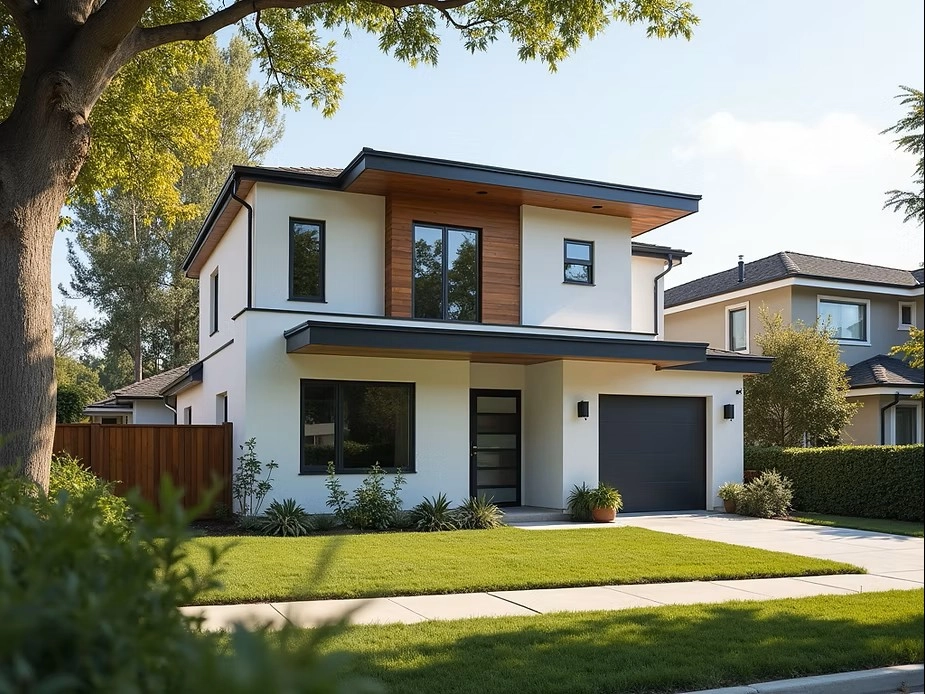
Northern Virginia is not a monolithic market. It encompasses jurisdictions with dramatically different characters, price points, and value propositions. Understanding the key submarkets helps buyers and investors identify where their priorities — commute time, school access, property type, price range — are best served.
| Submarket |
Median Price Range |
Best For |
Key Driver |
Trend |
| Arlington County |
$650K – $1.2M+ |
Urban buyers, Metro commuters, young professionals |
Amazon HQ2, Rosslyn-Ballston corridor, Pentagon |
Strong Demand |
| City of Alexandria (Old Town) |
$550K – $1.5M+ |
Historic charm, walkability, federal workers |
Historic district, waterfront, Metro access |
Premium Stable |
| McLean / Fairfax |
$700K – $3M+ |
Luxury buyers, TJ school zone, established suburbs |
Top schools, proximity to Beltway & CIA/DoD |
Luxury Growth |
| Vienna / Oakton |
$650K – $1.4M |
Families, Vienna Metro, neighborhood character |
FCPS school quality, low turnover, community |
Steady Appreciation |
| Reston / Herndon |
$430K – $950K |
Tech workers, Silver Line access, diverse options |
Silver Line, tech corridor, planned community |
Rising Fast |
| Loudoun County (Ashburn / Leesburg) |
$500K – $1.1M |
New construction buyers, families, space & value |
Silver Line extension, data center industry, growth |
High Growth |
| Prince William County (Woodbridge / Manassas) |
$380K – $700K |
First-time buyers, value seekers, investors |
Relative affordability, VRE rail access |
Value Entry Point |
Each of these submarkets operates within the same favorable macro conditions — strong employment, low inventory, high household income — but with distinct personalities, price points, and buyer pools. Arlington and Alexandria attract the Metro-first buyer who prizes walkability and urban density. McLean and Vienna attract families whose primary filter is school quality. Loudoun County attracts buyers who prioritize new construction, space, and relative value, and who are willing to commute via the Silver Line. There is no single answer to "where should I buy in Northern Virginia" — but there is an answer for every set of priorities.
6. Metro Access and Infrastructure: How Location Near Transit Adds Value
The Washington Metro system is a genuine real estate value driver in Northern Virginia, and its influence is quantifiable. Proximity to a Metro station — particularly a Silver or Orange Line station with reliable service — commands a premium that real estate professionals and researchers have consistently documented. Walkable access (within roughly half a mile) to a Metro station adds measurable value to both condominiums and single-family homes, all else being equal.
The Silver Line extension, completed through Loudoun County to Dulles International Airport, is the most significant recent infrastructure development affecting NoVA real estate. Communities along the new corridor — including Herndon, Reston, Wiehle Avenue, Ashburn, and Dulles — have seen commercial and residential development accelerate sharply in anticipation of and following the extension. Buyers who positioned themselves in these corridors ahead of the Silver Line’s completion benefited from infrastructure-driven appreciation that, in retrospect, was highly predictable.
The highway infrastructure — I-66, I-95, Route 7, the Dulles Toll Road, the Beltway — provides regional connectivity that enables the sprawling geography of the NoVA market to function as a coherent labor market. Express lane investments on I-66 and I-95 have improved commute predictability. The Virginia Railway Express (VRE) provides a commuter rail option from Prince William County and parts of Fairfax to Union Station in D.C., making outlying communities viable for buyers who work in the city but want more space and lower prices.
The Investment and Rental Market: What Investors Need to Know
For real estate investors, Northern Virginia offers a compelling profile: strong and stable rental demand, low vacancy rates, a tenant pool of well-credentialed professionals, and a long-term appreciation story that has consistently delivered equity growth. The trade-off is a high entry price and, in many submarkets, cap rates that are compressed relative to secondary markets. NoVA is a total-return market — you're buying appreciation alongside income, not income alone.
Rental demand in the region is driven by the same factors that drive purchase demand. Young professionals arriving for government contractor roles, military officers on two- to three-year assignments, federal employees in rotational positions, and foreign nationals working for embassies and international organizations all create a consistent baseline of rental demand that does not fluctuate with broader economic cycles the way private-sector markets do.
Where Investors Find the Best Opportunities
Condominiums and townhomes near Metro stations — particularly in Arlington, Alexandria, and Reston — have historically delivered strong rental performance. The tenant pool for these properties skews young and professional, vacancy periods are typically short, and rental rates have appreciated alongside purchase prices over time. For investors focused on cash flow, Prince William County and outer Loudoun County offer better cap rates with the trade-off of higher management complexity and slightly longer lease-up periods.
The region’s short-term rental market, while subject to HOA restrictions in many condo communities, has also been strong in markets close to tourist and business travel destinations — Old Town Alexandria, Crystal City/Pentagon City, and Rosslyn being the most notable. The density of business travel driven by the federal government creates sustained short-term demand that is far less seasonal than leisure-driven markets.
7. What Buyers Need to Know Before Entering the NoVA Market

Buying a home in Northern Virginia requires a different mindset than buying in most other American markets. The pace is faster, the competition is fiercer, and the decisions that would be considered aggressive elsewhere are simply standard operating procedure here. Buyers who approach NoVA with the same casual, exploratory posture they might use in a slower market routinely lose homes they want.
Get Pre-Approved Before You Start Looking
In a market where homes can move from listing to under-contract in 72 hours, a pre-approval letter is not a formality — it is a prerequisite for competitive participation. Sellers and their agents in the NoVA market will not take an offer seriously without documentation of financing. More importantly, being pre-approved gives you a clear, realistic budget that helps you avoid the common trap of falling in love with homes you can’t actually bid competitively on.
Understand the Offer Environment
Escalation clauses — offer terms that automatically increase your bid by a set increment above competing offers, up to a stated maximum — are common and often expected in competitive NoVA situations. Waiving inspection contingencies, offering larger earnest money deposits, and providing sellers with a flexible closing timeline are all tools that competitive buyers use to differentiate their offers in a multiple-offer environment. Working with an agent who has specific experience in the NoVA market is essential — the customs and competitive dynamics here are distinct from those in other regions.
Think Long-Term from Day One
The buyers who have fared best in Northern Virginia real estate are those who bought with a long-term horizon and did not attempt to time the market. The market’s fundamentals — constrained supply, durable demand, income growth, infrastructure investment — are not going to reverse. Waiting for a meaningful price correction has historically meant waiting indefinitely, with appreciation compounding in the interim. This is not advice to ignore valuation entirely, but it is a recognition that the cost of waiting in this market has consistently exceeded the cost of buying imperfectly.
Key Takeaway for Buyers
The NoVA market rewards preparedness and decisiveness. Have your financing locked, know your target neighborhoods and price ceiling, work with an agent who knows the specific micro-market dynamics, and be ready to move quickly when the right property appears. The buyers who hesitate routinely lose to the buyers who are ready.
8. Frequently Asked Questions About Northern Virginia Real Estate
Is Northern Virginia a good place to buy real estate right now?
Northern Virginia remains one of the most fundamentally sound real estate markets in the United States. The combination of low inventory, high household incomes, strong employment, and consistent demand makes it a strong market for long-term buyers. Short-term fluctuations occur — particularly in response to mortgage rate changes — but the region’s structural strengths have historically supported values through every cycle.
What is the average home price in Northern Virginia?
The average and median home prices in Northern Virginia vary significantly by jurisdiction. Across the broader NoVA region, median sale prices typically range from approximately $380,000 in outer Prince William County to $700,000–$1.2 million or more in Arlington and McLean. Specific pricing depends heavily on property type, school zone, Metro proximity, and condition.
What school districts in Northern Virginia are best for home values?
Fairfax County Public Schools, Arlington Public Schools, and Loudoun County Public Schools are the top-performing districts in the region. Within Fairfax County, homes in the Thomas Jefferson High School for Science and Technology feeder zones — including parts of Fairfax, McLean, Vienna, and Oakton — command the strongest school-driven premiums. These premiums are durable and well-established across market cycles.
Is Northern Virginia real estate a good investment?
For long-term investors, Northern Virginia has historically delivered strong total returns — combining rental income with appreciation. Cap rates are compressed relative to secondary markets, making this primarily an appreciation-and-stability play rather than a cash-flow-first investment. The region’s durable economic fundamentals, growing population, and constrained housing supply support the long-term thesis.
Which Northern Virginia neighborhoods have the best appreciation potential?
Areas along the Silver Line corridor — particularly Reston, Herndon, and Ashburn in Loudoun County — have shown strong appreciation since the line’s extension and are expected to continue growing as the corridor matures. Established submarkets like Arlington, McLean, and Vienna continue to appreciate reliably. For value-oriented buyers seeking above-average appreciation potential, emerging areas in eastern Loudoun County and the Manassas corridor in Prince William County represent opportunities at lower price points.
The Fundamentals Are as Strong as Ever
Northern Virginia real estate is expensive because it is valuable — and it is valuable because the underlying drivers of demand are durable, diverse, and deeply embedded in the fabric of the region. Low inventory, a high-income buyer pool, top-ranked schools, Metro access, federal employment stability, and a surging private tech sector all point in the same direction.
For buyers willing to compete decisively, for homeowners building long-term equity, and for investors seeking a stable, appreciating asset class, the Northern Virginia housing market continues to offer a compelling case — not despite its competitive intensity, but in many ways because of it.