


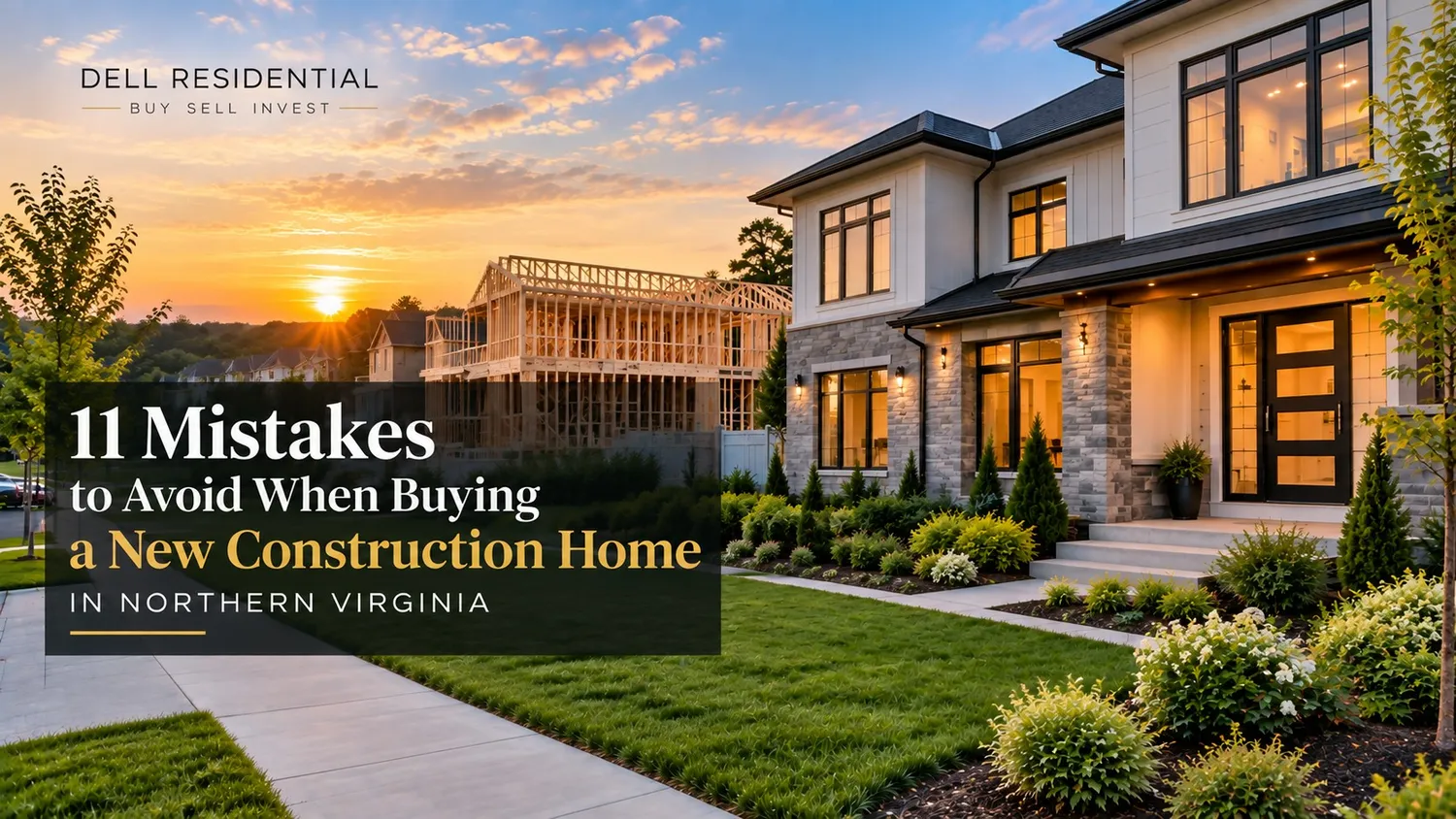
11 Mistakes to Avoid When Buying a New Construction Home in Northern Virginia
Buying a brand-new home can be exciting. You may get modern finishes, energy-efficient systems, a new-home warranty and the opportunity to personalize certain features before moving in. But buying new construction in Northern Virginia differs from buying a resale home, and some of the most expensive mistakes happen before buyers ever reach the closing table.
From builder contracts and upgrades to inspections and financing incentives, here are 11 mistakes Northern Virginia buyers should try to avoid.
1. Walking Into the Model Home Without Your Own Agent
The sales representative at a new-home community works for the builder. Buyers can have their own real estate agent representing their interests, but builder registration policies matter. Some builders require your agent to accompany you or register you on your first visit.
If you’re considering communities throughout Fairfax, Loudoun, Arlington or Prince William counties, talk with your agent before touring models or submitting your information online.
2. Assuming the Model Home Represents the Base Price
Model homes are designed to showcase what is possible—not necessarily what comes standard. The home you tour may contain upgraded flooring, cabinetry, countertops, lighting, appliances, and structural options that substantially increase the final price.
Ask for an itemized list that separates standard features from upgrades before comparing the home with new construction or other housing options.
3. Focusing Only on the Advertised Price
The base price is only the starting point. Lot premiums, structural selections, design-center choices, HOA fees and closing costs can change the real cost considerably.
A buyer attracted to a $900,000 base price, for example, should understand what it would cost to build the home they actually want before signing a contract.
4. Choosing Too Many Upgrades
The design center can make almost every upgrade seem essential. It isn’t. Structural changes that are difficult to complete later may deserve priority, while paint, light fixtures, and certain cosmetic improvements can often be changed after closing.
Buyers should also compare their finished price with surrounding homes. Spending heavily on upgrades doesn't automatically mean you'll recover every dollar at resale.
5. Not Researching the Builder
Don’t evaluate a builder solely by the model home. Research completed communities, warranty experiences, and homeowner feedback. If possible, visit one of the builder’s older Northern Virginia developments and see how the homes and common areas have aged.
6. Treating the Builder Contract Like a Standard Resale Contract
Builder contracts can differ substantially from the contracts buyers encounter in resale transactions. Pay particular attention to deposit requirements, financing deadlines, construction delays, change orders, inspection rights, completion dates and cancellation provisions.
This is one reason preparation matters when buying a newly built home in Northern Virginia.
7. Skipping Independent Inspections Because the Home Is New
A new home isn't automatically a perfect home. Construction involves many contractors, trades and components, and mistakes can happen.
Depending on the construction stage and contract, buyers may consider inspections during key phases as well as a final inspection before closing. An independent inspector can identify items that might otherwise go unnoticed until after move-in.
8. Looking Only at the Builder's Mortgage Incentive
Builders may advertise closing-cost assistance, rate incentives or other benefits for buyers who use an affiliated or preferred lender. Those incentives can be valuable, but compare the complete financing package—not just the headline credit.
Review the interest rate, points, lender fees, closing costs and loan terms before deciding which option provides the best fit for your situation.
9. Ignoring What Will Be Built Around You
Today’s peaceful construction site may eventually contain hundreds of homes, additional roads, commercial development, or other projects. Research the community's site plan and surrounding planned development.
This can be especially important in fast-growing portions of Loudoun and Prince William counties, where the surrounding landscape can change considerably during the years you own the home.
10. Assuming the Completion Date Is Guaranteed
Construction schedules can change because of permitting, weather, materials, labor availability, and other factors. Avoid creating a moving plan that leaves no room for delays.
This is particularly important if you’re selling another property or ending a lease before your new home is finished.
11. Rushing the Final Walkthrough
The excitement of finally receiving the keys can make buyers rush through the last stages. Don't. Check doors, windows, appliances, flooring, cabinets, plumbing fixtures, electrical components and completed repairs carefully.
Create a written punch list and understand which items will be completed before closing and which, if any, will be handled through the builder's warranty process.
Buying New Construction in Northern Virginia
New construction can offer advantages that are difficult to find in older Northern Virginia housing, but the buying process requires a different strategy. Understanding the builder's contract, true purchase price, financing, inspections and future development before committing can help you make a better-informed decision.
Buyers considering McLean should also read our McLean new construction home buyer guide and our comparison of new construction vs. resale homes in McLean.
Thinking About Buying a New Construction Home?
Dell Residential helps buyers navigate new construction communities throughout Northern Virginia, from builder registration and contract considerations to upgrades, inspections and the final walkthrough.
Frequently Asked Questions
Do I need a real estate agent when buying new construction?
You can purchase directly from a builder, but the builder's sales representative represents the builder. Having your own agent gives you someone focused on your interests. Check builder registration requirements before your first visit.
Should I get a home inspection on a brand-new house?
An independent inspection can still be valuable because newly constructed homes can have incomplete work, installation problems or defects that aren't obvious during a walkthrough.
Can you negotiate the price of a new construction home?
It depends on the builder, community and current inventory. Sometimes builders have more flexibility with financing incentives, closing-cost assistance, upgrades or quick-delivery homes than with the advertised base price.
What costs should I budget for beyond the base price?
Potential expenses include lot premiums, structural options, design-center upgrades, closing costs, HOA fees, moving expenses and post-closing items such as window treatments or landscaping, depending on what the builder includes.