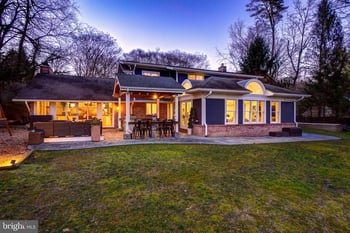
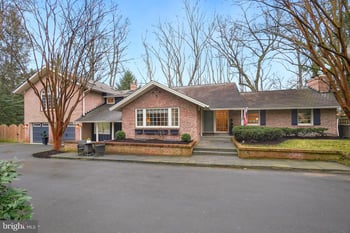


Burning Tree View is an established Bethesda subdivision featuring detached homes, mature landscaping, and convenient access to the surrounding Burning Tree area. Located primarily along a section of Burning Tree Road, the community offers a varied collection of original mid-century residences, expanded properties, renovated homes, and newer custom construction.
Buyers searching for Burning Tree View homes for sale may find brick Colonials, split-level residences, contemporary designs, and replacement homes on substantial residential lots. The neighborhood’s Bethesda location also provides access to River Road, Bradley Boulevard, the Capital Beltway, downtown Bethesda, and destinations throughout Montgomery County and Washington, D.C.
Burning Tree View is one of several residential subdivisions associated with the broader Burning Tree section of Bethesda. Other nearby communities include Burning Tree Manor, Longwood, Arrowood, and Bradley Hills Grove. These names may appear separately in legal records and real estate listings even though residents and agents sometimes use “Burning Tree” as a general geographic description.
Homes identified with the Burning Tree View subdivision can be found along Burning Tree Road and nearby residential streets in Bethesda’s 20817 ZIP code. Individual subdivision boundaries should be verified through the property’s legal description because neighborhood names used for marketing may cover a larger area than the recorded subdivision.
Much of the surrounding Burning Tree area was developed during the 1950s and 1960s. Burning Tree View includes homes from this period, including properties built during the mid-1960s, alongside houses that have been enlarged, substantially renovated, or replaced. This continued investment has produced a neighborhood with varied architecture, home sizes, and interior conditions.
| Location | Bethesda, Maryland 20817 |
|---|---|
| Community Type | Established residential subdivision within the greater Burning Tree area |
| Housing Type | Detached single-family homes |
| Development Period | Primarily mid-20th-century development, with later renovations and replacement construction |
| Common Architecture | Colonial, split-level, contemporary, transitional, and custom designs |
| Ownership | Generally fee-simple residential ownership |
| Homeowners Association | Recent property records commonly report no HOA; verify for the specific address |
| Nearby Roads | River Road, Bradley Boulevard, Seven Locks Road, and I-495 |
| Nearby Recreation | Burning Tree Park and other Montgomery County parks and trails |
Subdivision boundaries, association status, school assignments, and property features should be independently verified before a purchase.
Burning Tree View’s housing inventory reflects several generations of Bethesda development. Original homes may feature traditional brick exteriors, formal living and dining rooms, fireplaces, attached garages, finished lower levels, and layouts associated with construction from the 1950s and 1960s.
Split-level and contemporary properties may offer broader window openings, multiple living levels, vaulted spaces, or stronger connections between indoor rooms and outdoor patios. Colonial-style residences typically provide a more traditional arrangement, with principal living areas on the main level and bedrooms grouped upstairs.
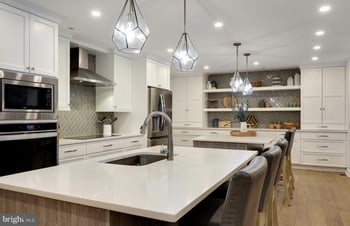
Many homes have been modified since their original construction. Improvements may include enlarged kitchens, primary-bedroom suites, home offices, finished basements, mudrooms, additional garages, replacement windows, upgraded mechanical systems, and expanded entertaining areas. The quality and documentation of those changes can differ significantly between properties.
Newer custom and replacement homes add transitional or contemporary architecture to the subdivision. These residences may include open kitchens, high ceilings, multiple workspaces, ensuite bedrooms, flexible lower levels, and integrated indoor-outdoor living. Buyers should compare construction quality, lot use, maintenance requirements, and permitting history rather than relying solely on total finished square footage.
The larger Burning Tree area is known for established landscaping and substantial residential parcels. Some Burning Tree View properties occupy lots around one-half acre, although lot sizes vary and should be confirmed through surveys and public records.
Private outdoor features may include patios, decks, gardens, lawns, wooded sections, play areas, and swimming pools. These are individual property improvements rather than shared subdivision amenities. Buyers considering a home with a pool should examine its permits, equipment, surface condition, safety features, maintenance history, and insurance requirements.
Mature trees can provide shade and visual interest, but their condition and location should be evaluated. An arborist may be helpful when large trees are close to the house, driveway, utility lines, or neighboring properties. Buyers should also review grading, retaining walls, drainage systems, downspout placement, and evidence of water movement around the foundation.
A current boundary survey can identify property lines, easements, fences, accessory structures, and possible encroachments. This information is particularly useful when planning an addition, pool, fence, outdoor kitchen, or other major improvement.
Recent property listings within Burning Tree View commonly identify the subdivision as having no homeowners association. That generally means buyers should not assume the existence of shared facilities, mandatory association dues, or an HOA architectural-review process.
However, the absence of an HOA does not mean a property is unrestricted. Recorded covenants, easements, county zoning, building setbacks, lot-coverage limits, tree regulations, and stormwater requirements may still affect renovations or new construction. Association information can also be recorded differently from one section or property to another.
Buyers should rely on the title report, seller disclosures, subdivision documents, and county records for the specific home. Anyone planning a substantial project should consult Montgomery County permitting resources and qualified design professionals before assuming that a concept can be approved.
Burning Tree Park is located at 7904 Beechtree Road. Montgomery Parks identifies the 11.3-acre facility as offering two softball fields, a soccer field, two accessible tennis courts, and a tennis practice wall. Facility availability, permits, field conditions, and operating hours should be confirmed directly with Montgomery Parks.
Additional recreation choices are available throughout Bethesda, including Cabin John Regional Park and the Capital Crescent Trail. Cabin John Regional Park includes trails, athletic facilities, picnic areas, and other public amenities. The Capital Crescent Trail provides a regional route for walking and cycling between Bethesda and Washington, D.C., with access points outside Burning Tree View.
The nearby Burning Tree Club, Bethesda Country Club, and Congressional Country Club are private organizations. Proximity to a private club does not provide automatic membership or access, and these facilities should not be described as subdivision amenities.
Burning Tree View residents can reach shopping, dining, grocery stores, and professional services in several nearby commercial areas. Downtown Bethesda provides restaurants, shops, entertainment, medical offices, and Metro service. Westfield Montgomery and the commercial corridors around River Road and Old Georgetown Road offer additional options.
Travel times depend on traffic, the property’s exact location, and the destination. Buyers who anticipate regular trips to a specific office, school, Metro station, or airport should test the route during relevant commuting periods.
River Road and Bradley Boulevard provide connections toward downtown Bethesda, Friendship Heights, and Washington, D.C. Seven Locks Road and nearby I-495 support travel to other parts of Montgomery County and Northern Virginia.
Burning Tree View is not a Metro-centered neighborhood. Depending on the destination, residents may drive, use a Ride On bus connection, cycle, or arrange drop-off access to Bethesda or Friendship Heights Metro stations. Bus routes and schedules can change, so current service should be verified through Montgomery County.
The neighborhood’s road access can be convenient, but regional traffic varies considerably. Proximity to a major road may also affect noise and turning patterns differently from one property to another. Buyers should visit a home at multiple times of day when traffic conditions are important to their decision.
Burning Tree View is served by Montgomery County Public Schools. School assignments are determined by the specific property address and can change through boundary studies, capacity planning, or program decisions.
Buyers should use the official MCPS school-assignment tool and confirm the result directly with the school system. A school named in an older listing or neighborhood guide does not guarantee the current assignment, transportation availability, or eligibility for a particular academic program.
Burning Tree View is a relatively small subdivision, so the number of publicly available listings may be limited. Buyers can prepare by securing financing, identifying preferred home styles, and deciding whether they want a property that is move-in ready, suitable for renovation, or potentially appropriate for replacement construction.
Inspection priorities should reflect the age and renovation history of the individual residence. Buyers may want detailed evaluations of the roof, foundation, chimney, electrical service, plumbing, windows, insulation, heating and cooling systems, drainage, decks, retaining walls, and previous additions.
For renovated or expanded homes, buyers should request building permits, final inspection records, architectural plans, contractor information, warranties, and invoices for major improvements. A polished interior does not replace documentation of structural, electrical, plumbing, or mechanical work.
Buyers interested in future expansion should evaluate zoning, setbacks, lot coverage, trees, easements, stormwater requirements, and utility locations before completing the purchase. A feasibility review by an architect, engineer, or land-use professional may be appropriate when a planned project is central to the buying decision.
Marketing a Burning Tree View property should emphasize the home’s specific architecture, lot, renovations, outdoor features, and access to Bethesda destinations. Because the neighborhood contains homes from different construction periods, sellers should clearly explain how their property compares with original residences, expanded homes, and newer construction.
Professional photography, accurate floor plans, and organized improvement records can help buyers understand the home. Exterior photography should document the setting, landscaping, patios, decks, and yard without overstating privacy or community amenities.
Before listing, sellers should assemble permits, surveys, system ages, warranties, utility information, and documentation for significant renovations. Addressing deferred maintenance and clarifying the property’s subdivision and association status can reduce uncertainty during the transaction.
Burning Tree View is a specific recorded subdivision within the broader area commonly called Burning Tree. The larger area includes several separately named communities.
Burning Tree View primarily contains detached, fee-simple homes. Buyers may encounter Colonial, split-level, contemporary, transitional, and custom designs.
Many homes date from the mid-20th century, including residences built during the 1960s. Renovations, additions, and replacement construction have continued in later decades.
Recent property listings commonly report no HOA. Buyers should nevertheless verify the title documents and current requirements for the specific address.
Some properties have lots around one-half acre, while others differ in size and configuration. A survey and public property record should be used to confirm dimensions.
A shared subdivision pool should not be assumed. Some homes have private pools, but these belong to individual property owners.
Burning Tree Park offers public athletic facilities, including softball and soccer fields, tennis courts, and a tennis wall. Other county parks and trails are accessible elsewhere in Bethesda.
Montgomery County Public Schools serves the area. The current assignment should be verified using the exact property address.
Buyers may want closer evaluation of the foundation, roof, chimney, drainage, electrical system, plumbing, windows, insulation, mechanical equipment, and previous additions.
Possibly, but feasibility depends on zoning, setbacks, lot coverage, easements, trees, stormwater requirements, and county permits. Buyers should complete a project-specific review before purchasing.
Buyers considering Burning Tree View may also want to explore:
Contact Dell Residential for current Burning Tree View listings, private showing assistance, and guidance on buying or selling Bethesda real estate.
Explore homes, condos, townhomes, and communities throughout Northern Virginia, Washington, DC, and Maryland.
Alexandria Homes for Sale
Arlington Homes for Sale
Fairfax Homes for Sale
McLean Homes for Sale
Vienna Homes for Sale
Falls Church Homes for Sale
Reston Homes for Sale
Ashburn Homes for Sale
Leesburg Homes for Sale
See All Cities >