


Northern Virginia Housing Market Trends: Financing, Contingencies and Seller Subsidies
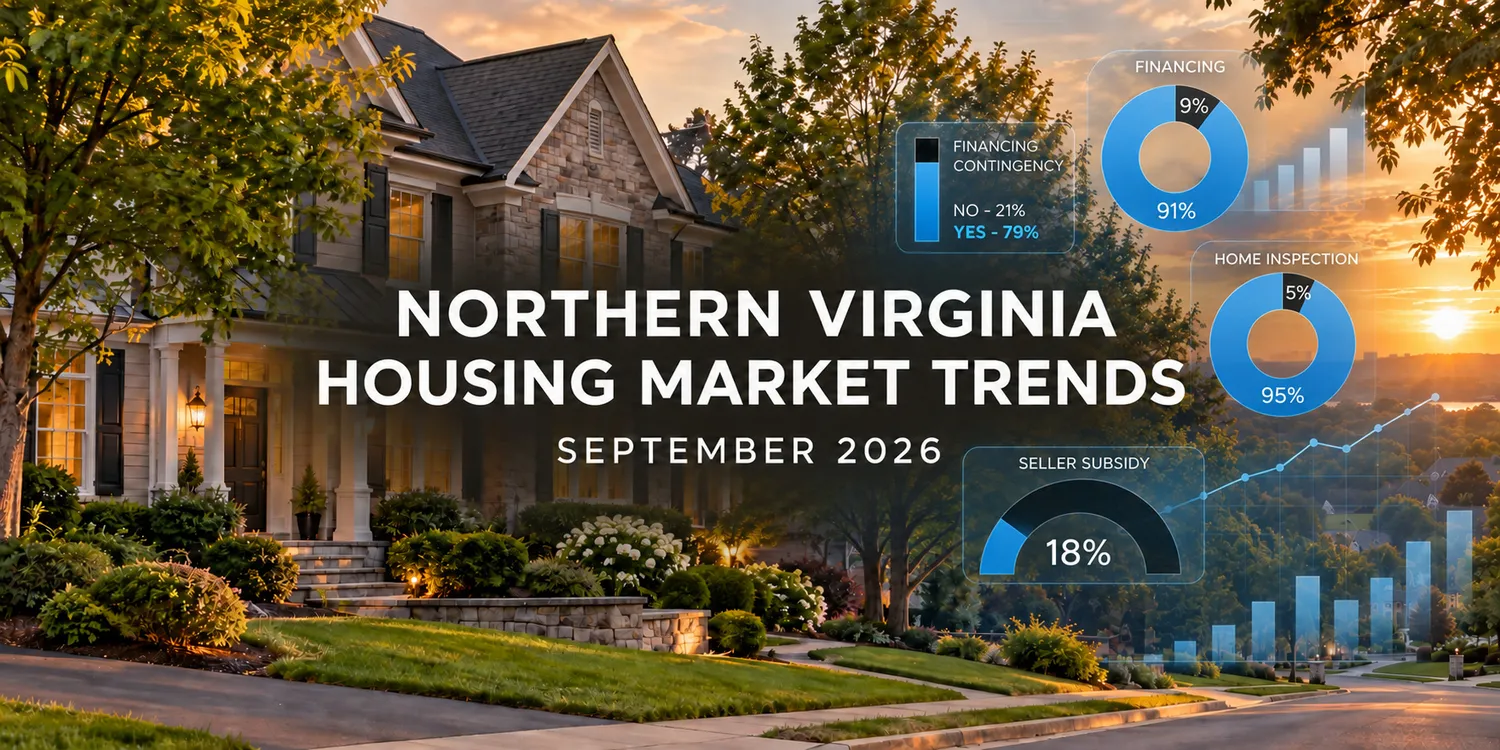
Northern Virginia buyers continued to use traditional financing and protective contract contingencies during the week of September 1–7, 2026. Data from Cardinal Title Group shows that 91% of Northern Virginia contracts involved financing, while only 9% were cash purchases. Most buyers also retained financing, appraisal and home-inspection protections rather than waiving them to compete.
The report analyzed 113 contracts received across Northern Virginia and several surrounding Mid-Atlantic markets. Because this is a limited weekly sample—not a complete Bright MLS market report—the figures should be viewed as a snapshot of contract structure rather than a measurement of every local transaction. Still, the results provide useful insight for buyers and sellers exploring Northern Virginia real estate.
Northern Virginia Contract Snapshot
- Financed purchases: 91%
- Cash purchases: 9%
- Financing contingency included: 79%
- Appraisal contingency included: 77%
- Home-inspection contingency included: 95%
- Seller subsidy included: 18%
Most Buyers Kept Their Contract Contingencies
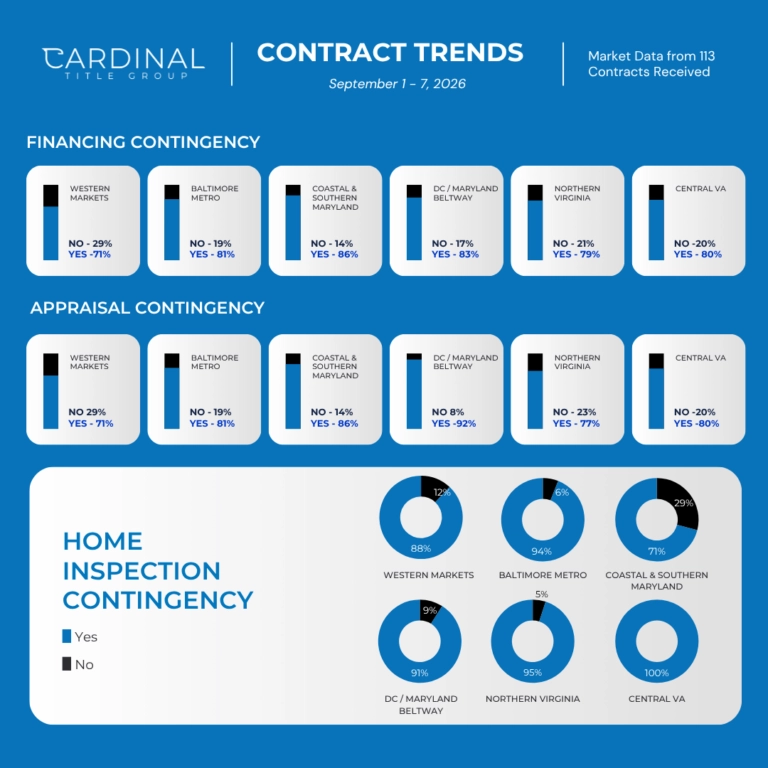
Protective contingencies remained common in Northern Virginia contracts. Approximately 79% included a financing contingency, 77% included an appraisal contingency and 95% included a home-inspection contingency. That means only 5% of contracts in the sample did not contain an inspection contingency.
These numbers suggest that buyers may not need to waive every protection to submit a competitive offer. The appropriate strategy still depends on the property, competing offers and the buyer’s finances. Buyers should understand the risks before removing an appraisal, financing or inspection safeguard. This is especially important when comparing resale properties with new construction and renovation opportunities in Northern Virginia.
Financing Dominated Northern Virginia Purchases
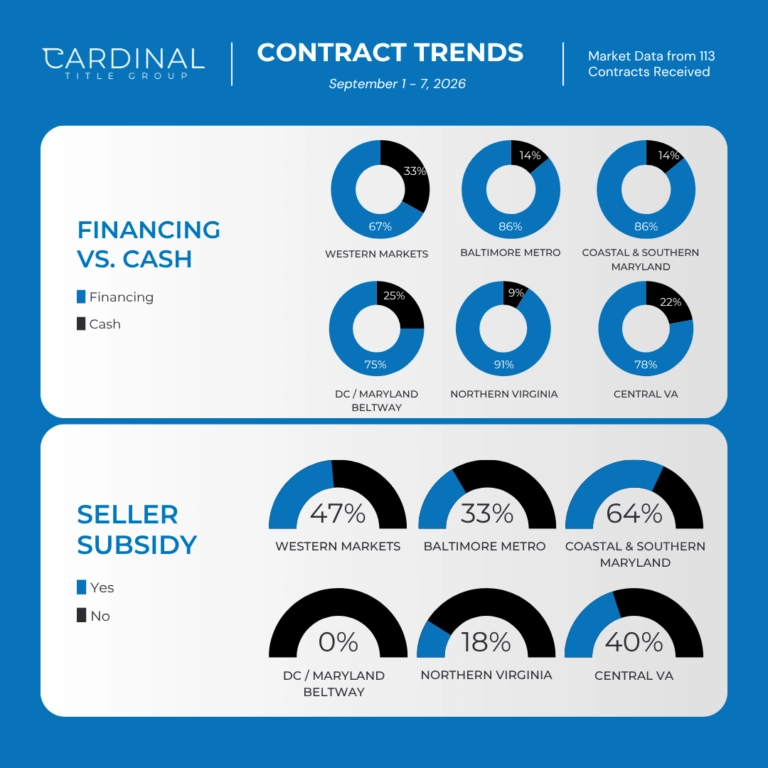
Financed transactions represented 91% of the Northern Virginia contracts reviewed, the highest financing share among the six regions shown in the report. Cash accounted for the remaining 9%. This is an important reminder that financed buyers remain highly active, even in a market where cash offers can receive significant attention.
Seller assistance appeared in 18% of Northern Virginia contracts. A seller subsidy can help an eligible buyer offset closing costs, although the amount available depends on the loan program, property and negotiated contract. Buyers preparing an offer should compare the value of a closing-cost credit with other possible terms, including price, repairs and settlement timing. For a broader look at contract protections, review our earlier guide to financing, appraisal and inspection contingencies.
How Long Did Northern Virginia Contracts Take to Close?
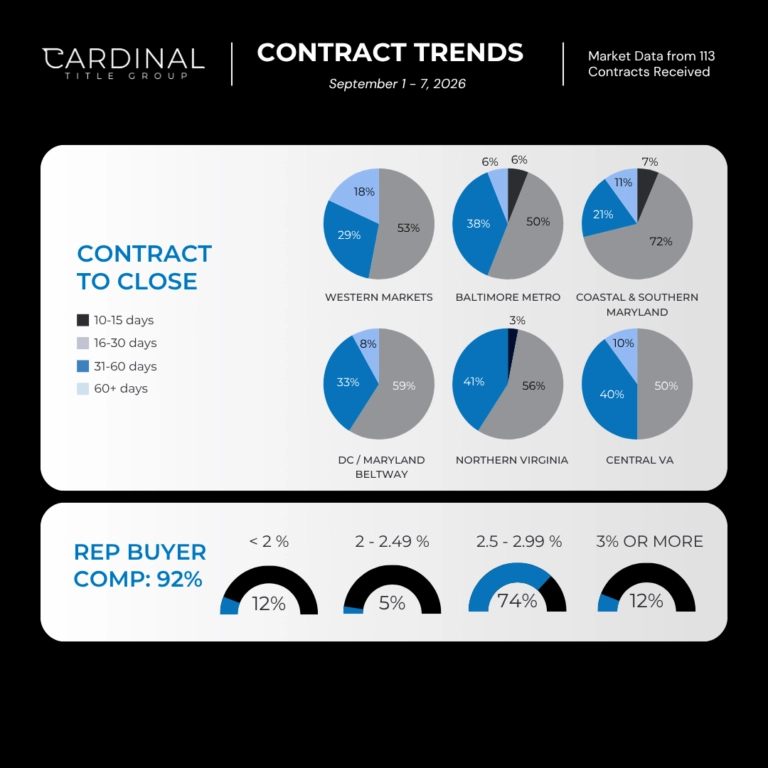
Most Northern Virginia contracts used conventional settlement periods. About 56% had a contract-to-close timeline of 16–30 days, while 41% were scheduled for 31–60 days. Only 3% were expected to close within 10–15 days.
A longer timeline does not necessarily indicate a problem. Loan processing, appraisal scheduling, inspections, condominium document review and the seller’s moving plans can all influence the closing date. Buyers relocating to the region may benefit from learning more about what to expect when moving to Northern Virginia.
Buyer-Representative Compensation Trends
The report indicates that 92% of the contracts reviewed included buyer-representative compensation. The 2.5%–2.99% range was the most frequently reported category, accounting for 74% of the compensation observations shown. Compensation is negotiable and can vary by transaction, brokerage agreement and seller offering, so buyers should review the terms of their representation agreement before touring properties or submitting an offer.
What These Contract Trends Mean
For buyers, the data shows that financing and standard contingencies remain part of many successful contracts. For sellers, it demonstrates that a strong offer should be evaluated on more than whether it is cash. Loan strength, contingency language, closing flexibility, subsidy requests and the buyer’s overall ability to perform can all affect an offer’s quality.
These figures should not be used as a substitute for neighborhood-level analysis. Contract conditions can differ substantially among Arlington, Alexandria, Fairfax County, Loudoun County and nearby communities.
Frequently Asked Questions
Are most Northern Virginia buyers paying cash?
No. In this weekly sample, 91% of Northern Virginia contracts used financing and 9% were cash purchases.
Are buyers still including home inspections?
Yes. Approximately 95% of Northern Virginia contracts in the report included a home-inspection contingency.
Are Northern Virginia sellers providing closing-cost assistance?
Seller subsidies appeared in 18% of the Northern Virginia contracts reviewed. Availability depends on the property, competition and negotiated terms.
How quickly are Northern Virginia homes closing?
About 56% of the sampled contracts had a 16–30-day closing period, while 41% had a 31–60-day timeline.
Planning to Buy or Sell in Northern Virginia?
Contract terms can be just as important as price. Dell Residential can help you evaluate financing, contingencies, seller assistance and closing timelines based on the property and current competition.
Source: Cardinal Title Group Contract Trends, September 1–7, 2026. Data reflects 113 contracts received across the markets included in the report and should be interpreted as a weekly sample.