



Moving to Northern Virginia: 11 Things to Know Before You Relocate
Moving to Northern Virginia can put you close to Washington, DC, high-paying employment, international airports, historic communities and some of the country’s most recognizable attractions. It can also mean expensive housing, complicated commutes and deciding among communities that offer very different lifestyles.
I want this guide to feel like a straightforward conversation about what you are signing up for. Northern Virginia offers significant opportunities, but choosing the right location requires more than finding a house you like.
The term “Northern Virginia” generally includes Arlington, Alexandria, Fairfax, Loudoun and Prince William, along with several independent cities. The right community depends on your budget, workplace, transportation needs and preferred property type. Here are the 11 things I believe matter most before relocating.
1. Northern Virginia Is a Region, Not One City
Northern Virginia stretches from dense neighborhoods beside Washington, DC, to suburban master-planned communities and rural areas near the Blue Ridge Mountains. Two homes separated by 25 miles may offer completely different daily experiences.
Arlington provides Metro-accessible neighborhoods, condominiums, and an urban environment. Alexandria includes historic Old Town, newer developments, and suburban neighborhoods extending into Fairfax County. Fairfax offers established communities and major employment centers, while Loudoun and Prince William generally provide more new construction and larger planned developments.
Start by deciding whether you want an urban, suburban or semi-rural setting. That decision will narrow the search more effectively than choosing a county based only on its reputation.
2. Housing Costs Change Quickly by Location
Housing is usually the biggest surprise for newcomers. Prices tend to rise as you move closer to Washington, Metro stations, Tysons, and other major employment centers. However, property type, condition, lot size, and school assignment can create substantial differences within the same ZIP code.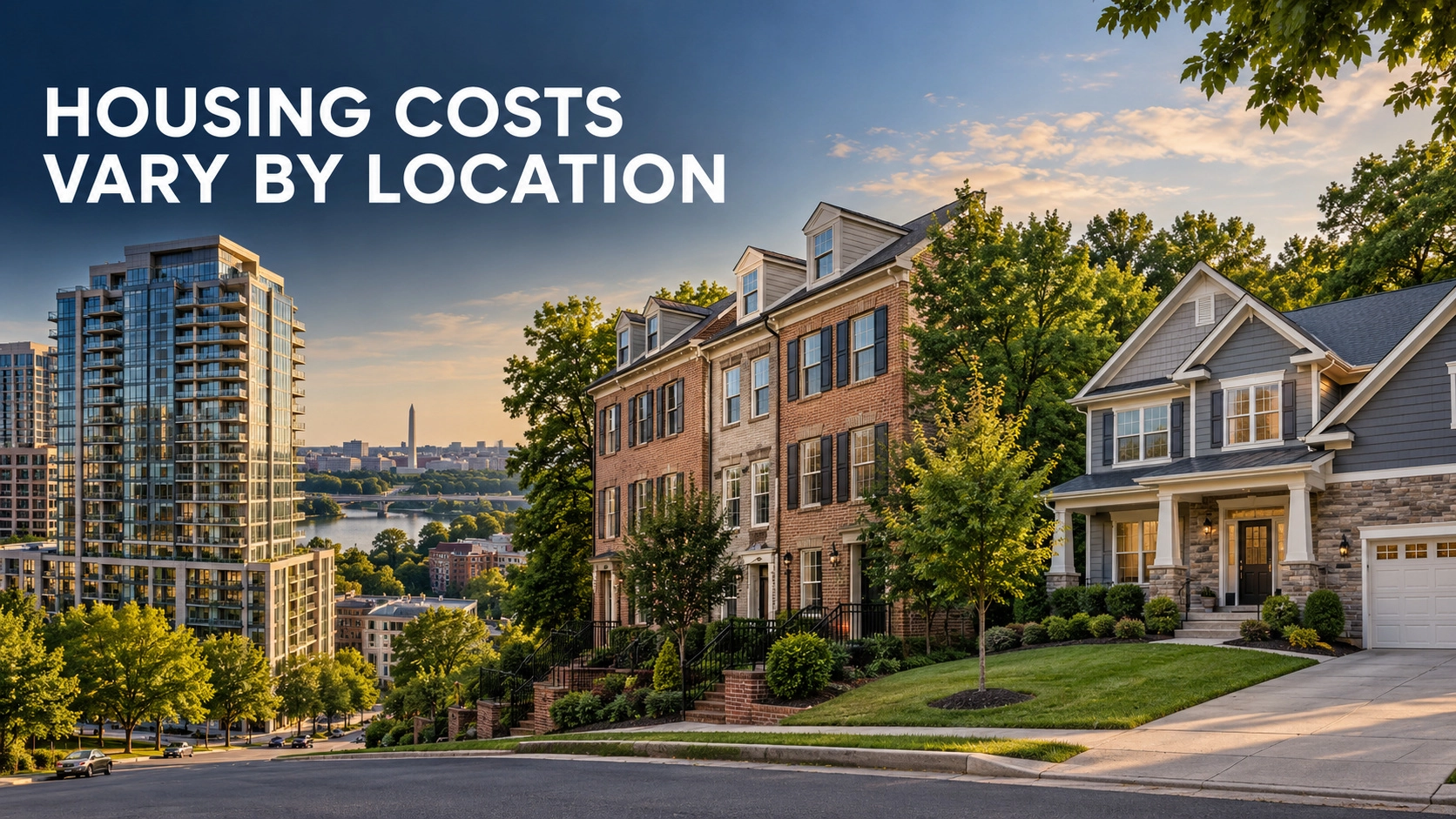
A buyer’s budget might purchase a condominium in Arlington, a townhouse in Fairfax County or a detached home farther west. Communities such as McLean and Great Falls contain significant luxury inventory, while Woodbridge and parts of Prince William County may provide more space at a lower entry price.
Compare total monthly costs—not just list prices. Condominium fees, HOA dues, property taxes, insurance, parking and commuting expenses all affect affordability.
3. Choose Your Commute Before Choosing Your Home
This is the advice I emphasize most often: evaluate the commute before becoming attached to a house. A property that appears close to work on a map can require a difficult trip during rush hour.
Major routes include I-66, I-95, I-395, Route 28, the Capital Beltway, and the Dulles Toll Road. Several corridors have express lanes or variable tolling. A longer commute can also save you money on housing, but that savings may come with added fuel, tolls, and time away from home.
If possible, test the trip during the hours you expect to travel. Hybrid workers should also consider how often they must report to the office because commuting twice per week creates a different calculation than commuting every day.
4. Metro Access Can Be Valuable—but It Is Not Everywhere
Metro serves portions of Arlington, Alexandria, Fairfax, and Loudoun, but Northern Virginia is not universally transit-oriented. Most residents still need a vehicle for at least some daily activities. 
The Orange and Silver lines serve Arlington and destinations extending into Fairfax and Loudoun. The Blue and Yellow lines connect Alexandria and Arlington with Washington. Buyers prioritizing transit often consider Rosslyn, Clarendon, Ballston, Old Town Alexandria, Vienna, Reston, or communities near the Silver Line.
Verify the actual walking route instead of relying on “near Metro” listing language. A station may be geographically close but separated from the property by a highway, steep terrain, or an indirect pedestrian route.
5. The Job Market Is Broader Than the Federal Government
Federal agencies shape the regional economy, but Northern Virginia also has large concentrations of government contractors, technology companies, cybersecurity firms, consultants, healthcare employers and defense-related businesses.
Tysons is a major corporate and employment center. The Dulles corridor supports aviation, logistics, cloud computing and data infrastructure. Arlington contains federal, corporate and technology employers, while Alexandria provides access to both Washington and employment centers along the Beltway.
The U.S. Bureau of Labor Statistics reported that the Washington-Arlington-Alexandria metropolitan area had an average hourly wage of $44.20 in May 2025, compared with $33.54 nationally. High-paying professional employment helps explain why so many wealthy jurisdictions are concentrated in Northern Virginia.
6. Your Budget May Go Farther Outside the Beltway
Buyers often face a basic tradeoff: proximity versus space. Close-in locations can reduce commuting time and improve access to restaurants or transit, but the same budget may purchase a smaller property.
Moving west or south may provide newer construction, additional bedrooms, a garage or a larger yard. Ashburn is known for planned communities and access to the technology corridor. Reston combines trails, community amenities, and Silver Line service, while Woodbridge provides access to I-95 and commuter transportation.
There is no universally correct choice. I recommend comparing three realistic properties in different locations and calculating the full monthly payment and commute for each one.
7. Virginia Taxes Vehicles as Personal Property
New residents are sometimes surprised that Virginia localities assess annual personal property tax on vehicles. The bill depends on the vehicle’s assessed value, the local tax rate, and any relief available in that jurisdiction.
After establishing residency, review the current licensing and vehicle requirements through the Virginia Department of Motor Vehicles. You may also need to register the vehicle with your county or independent city.
Property-tax rates also vary by jurisdiction. When comparing homes in Fairfax, Arlington, Alexandria or Loudoun, include real estate taxes, HOA fees and vehicle taxes in your relocation budget rather than focusing exclusively on the mortgage payment.
8. You Will Experience Four Distinct Seasons
Northern Virginia has hot, humid summers, colorful falls, cold winters and pollen-heavy springs. Snowfall varies from year to year, but even a small storm can disrupt roads, schools and public transportation.
The climate also affects home maintenance. Buyers should evaluate the HVAC system, roof, drainage, insulation, trees and exterior condition. Older properties in Falls Church, Arlington or Alexandria may have mature landscaping and architectural character but could require additional maintenance.
Newer homes may offer modern systems and improved energy efficiency, although buyers should still obtain an inspection and review builder warranties carefully.
9. School Assignments Must Be Verified for Each Property
School boundaries can change and sometimes divide neighborhoods or streets. A city name in a property’s mailing address does not necessarily identify its school system.
For example, an Alexandria postal address may be located in the independent City of Alexandria or in Fairfax County. A Falls Church mailing address can also describe properties outside the independent City of Falls Church.
Always confirm the current assignment directly with the applicable school district before making a decision. Do not rely exclusively on an MLS listing, a real estate portal or a ZIP code. Buyers should also investigate transportation, programs and enrollment procedures based on their individual needs.
10. HOAs and Condominium Fees Are Common
Many Northern Virginia condominiums, townhome developments and planned communities have an association. Fees may cover amenities, exterior maintenance, landscaping, utilities, insurance or reserve contributions, depending on the property.
Review the association’s budget, rules, reserve funding, insurance, litigation and pending projects. A lower-priced Arlington condo with a large monthly fee could cost more each month than a higher-priced property with fewer shared expenses.
Also check restrictions involving pets, parking, rentals, renovations and home-based businesses. Association documents can materially affect how you use the property and should be reviewed carefully within the applicable contract period.
11. Every Community Offers a Different Version of Northern Virginia
Arlington may suit someone who wants Metro access and an urban environment. Alexandria offers historic architecture, waterfront areas, and established suburban neighborhoods. Fairfax County provides access to Tysons, Reston and numerous employment centers.
Loudoun includes newer communities, technology jobs and more rural western areas. Prince William often attracts buyers seeking additional space while maintaining access to the larger Washington region.
Visit your leading communities during weekdays, evenings, and weekends. Notice traffic, parking, noise, pedestrian access, and the distance to the places you will use regularly. Exploring Vienna, Reston and Ashburn in person will tell you more than comparing listing photographs alone.
Is Moving to Northern Virginia Right for You?
Northern Virginia works well for people who value career opportunities, access to Washington, transportation choices and a wide range of housing environments. In return, residents accept relatively high housing costs, traffic, tolls and a competitive market for well-located homes.
The best first step is to identify your maximum monthly payment, workplace, acceptable commute and preferred property type. From there, you can compare communities based on how you will actually live—not simply which location is most familiar or receives the most attention.
Frequently Asked Questions About Moving to Northern Virginia
What is considered Northern Virginia?
The region generally includes Arlington, Alexandria, Fairfax, Loudoun and Prince William, along with nearby independent cities. Definitions vary depending on the organization or purpose.
Do you need a car in Northern Virginia?
Most residents benefit from having a car. Some Metro-accessible Arlington and Alexandria neighborhoods allow a less car-dependent lifestyle, but transit coverage varies significantly.
Where should commuters live?
The answer depends on the workplace. A Pentagon employee, a Tysons worker and someone commuting to Dulles may need completely different locations.
Is Northern Virginia expensive?
Housing and transportation expenses are high compared with many parts of the country. However, prices vary considerably by jurisdiction, neighborhood and property type.
Planning a Move to Northern Virginia?
Dell Residential can help you compare neighborhoods, commuting options, property types and available homes across Northern Virginia.
Browse Alexandria homes for sale, explore Arlington real estate or start your search in Fairfax.